

Connect PayPal to Nevian
Connect PayPal so sales and payment changes reach Nevian and can be matched to the visit that brought the buyer.
What you need
Availability. This connection is not available in this version of the panel yet. Use this guide to prepare the account settings; continue only when its named integration and credential fields appear in your workspace. Do not send its events to Custom or another provider URL.
- A PayPal account with permission to configure notifications.
- An active Nevian plan and an owner, admin or member role. Viewers cannot connect integrations.
- Keep the checkout and Nevian tabs open side by side.
Steps
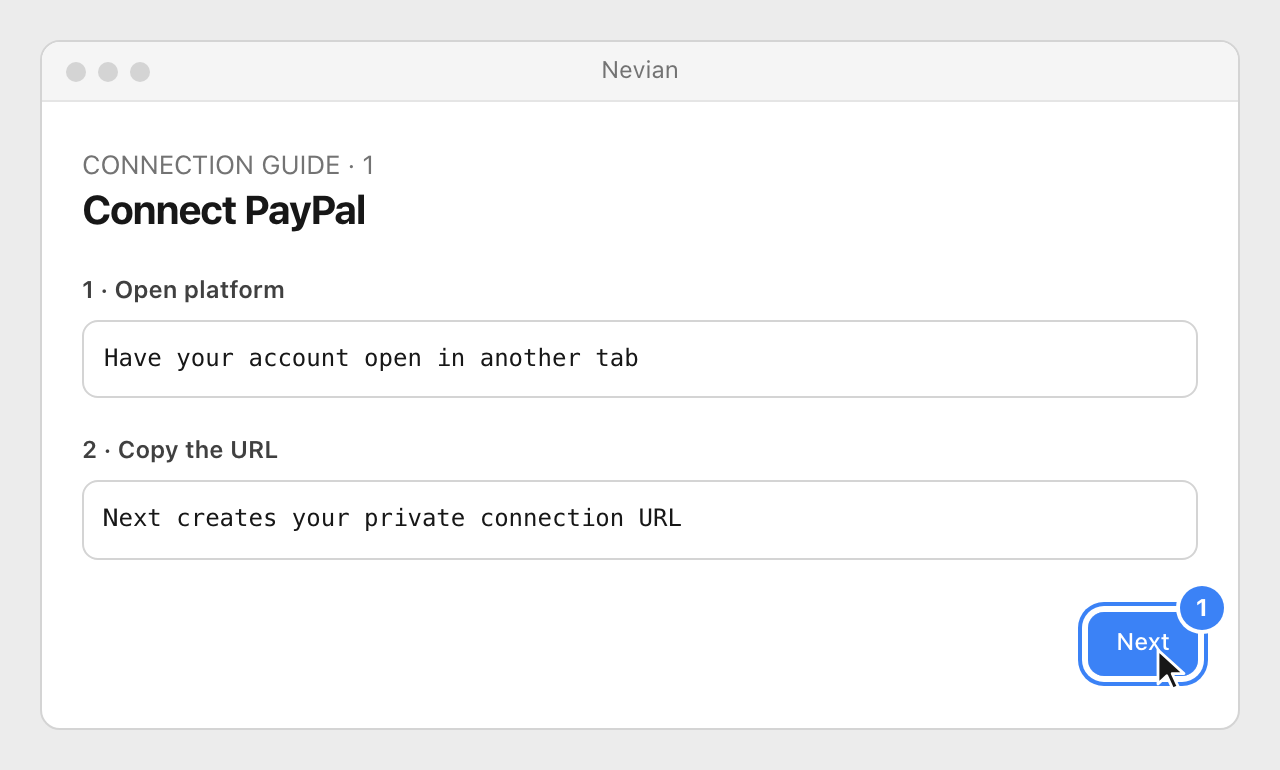
In Nevian, open Integrations → Add integration (Connect provider in an empty workspace), choose PayPal and click Next with the platform open in another tab.
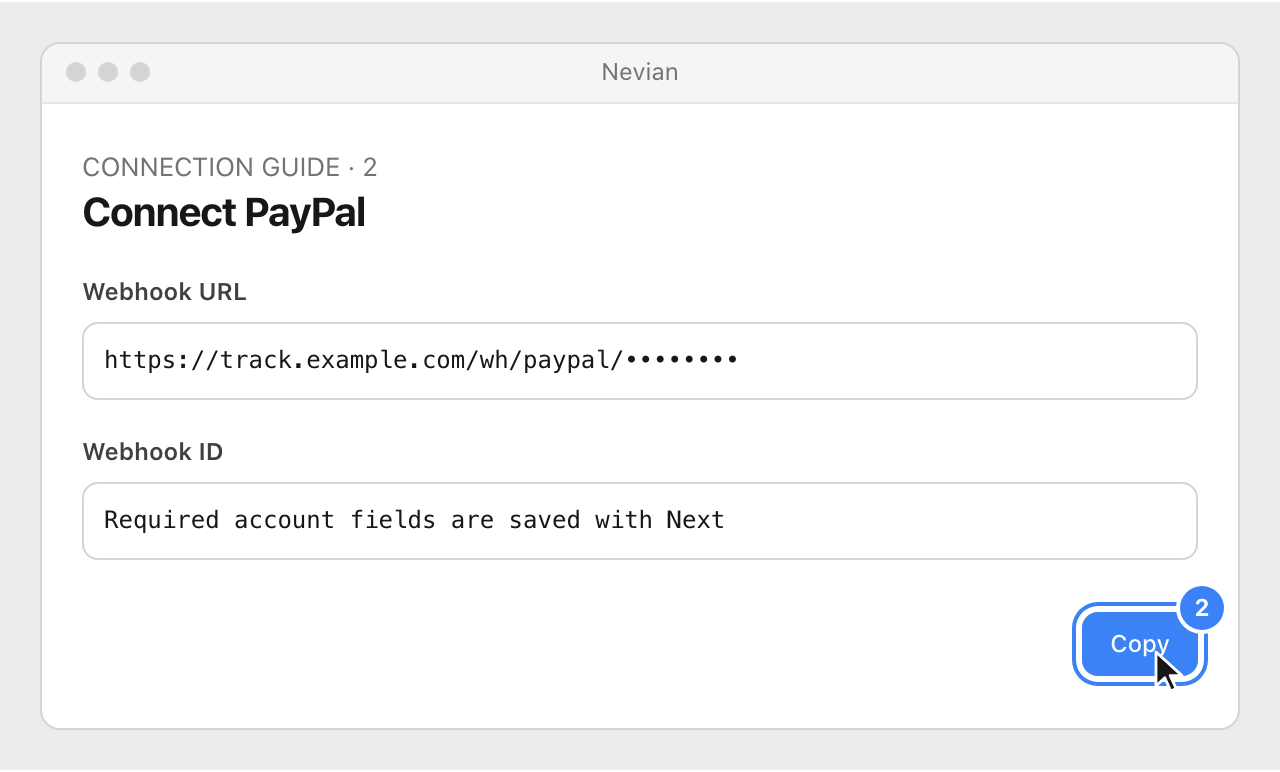
Copy the complete Webhook URL. Keep it private and leave this window open while you configure PayPal.
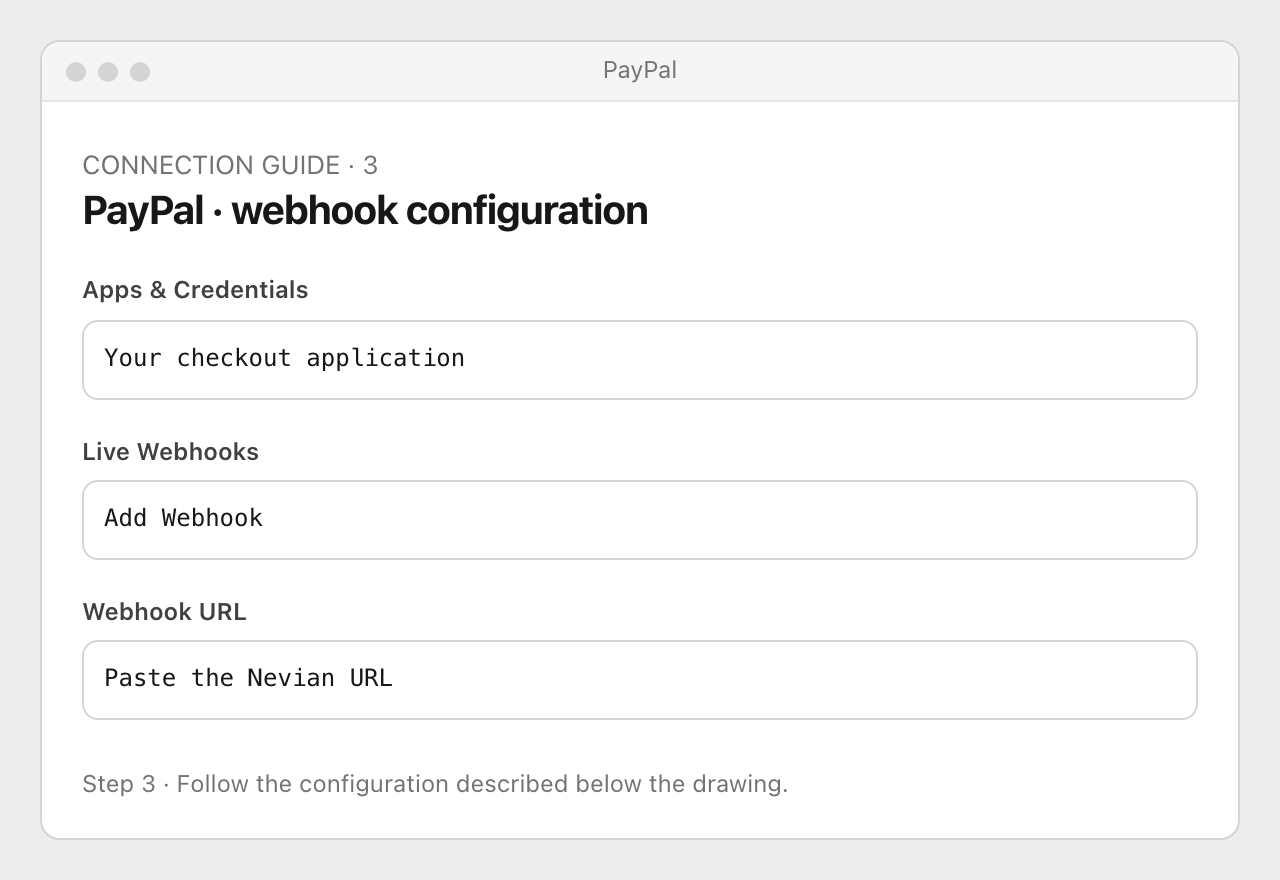
In the PayPal Developer Dashboard, switch to Live, open Apps & Credentials, choose the REST application your checkout uses, then Live Webhooks → Add Webhook.
Paste the URL, subscribe to the events below and save. Copy the displayed Webhook ID into Nevian; it is required for signature verification, even though it is not a password.
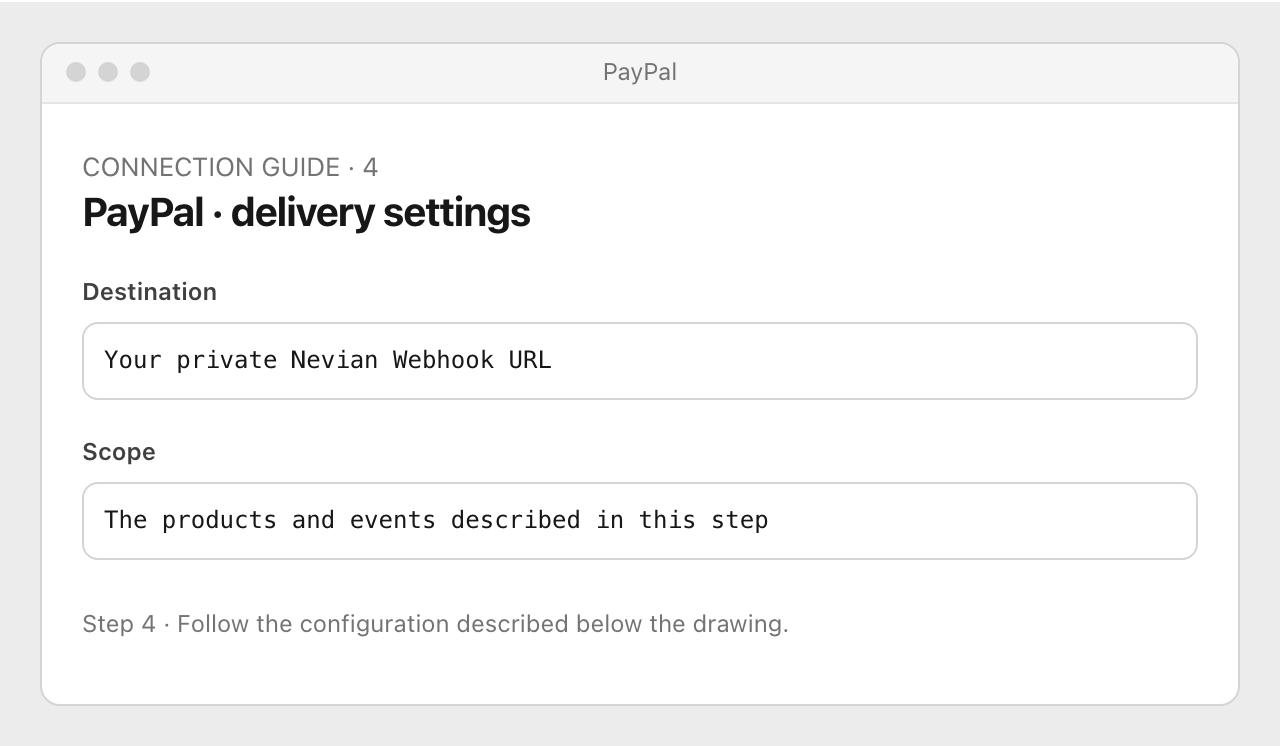
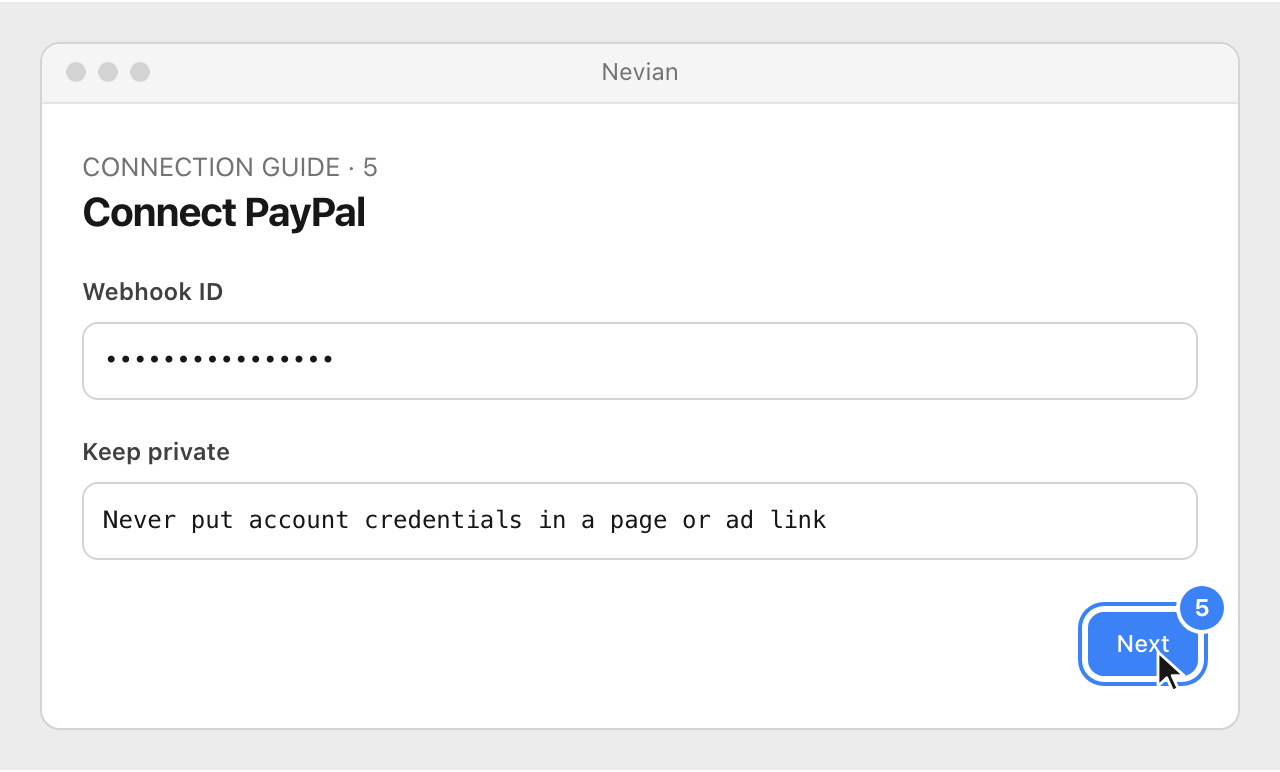
Return to Nevian, enter Webhook ID and click Next to save it. Copy it from the same account and webhook you just configured.
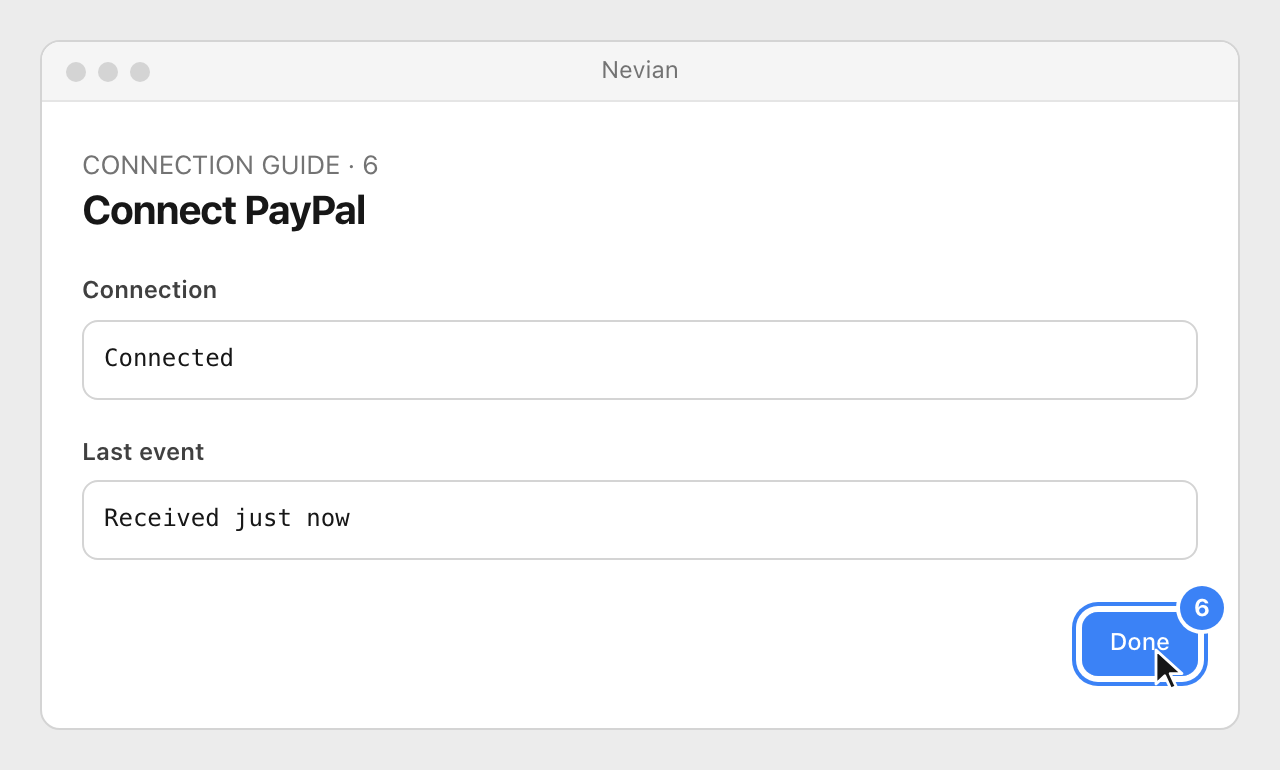
Back in Nevian, go on to the last step of the window. It reads Connected. Waiting for the first sale. Click Done: your first sale shows up by itself.
Events: CHECKOUT.ORDER.APPROVED, CHECKOUT.PAYMENT-APPROVAL.REVERSED, PAYMENT.CAPTURE.COMPLETED, PAYMENT.CAPTURE.PENDING, PAYMENT.CAPTURE.DENIED, PAYMENT.CAPTURE.DECLINED, PAYMENT.CAPTURE.REFUNDED, PAYMENT.CAPTURE.REVERSED and CUSTOMER.DISPUTE.CREATED. Buyer approval alone is pending; the captured payment creates the sale.
Check that it works
- The PayPal card in Integrations shows it as connected right away, waiting for the first sale.
- The first real sale shows up in Logs → Webhooks and in the reports. A delivered webhook can be logged without creating a sale when the event is informational.
- Set the purchase unit’s
custom_idto the visit ID when creating the order. The source and webhook must belong to the app used by the checkout; another app’s webhook cannot observe its transactions.
Problems
No sale shows up after a real sale
Check the complete URL, event subscriptions and product scope. If you rotated the integration key, replace the URL in the provider too.
The call was rejected
Read the reason in Logs → Webhooks. Check the secret when one is configured. After you fix it, resend the rejected event from the provider, so it is not lost. A call from PayPal’s generic Webhooks simulator is always rejected: the simulator signs for a placeholder Webhook ID.
No matching click
A call that is not linked to a visit means the buyer reached the checkout without the click ID: follow the click ID instructions above.
Still stuck? Chat with us on WhatsApp or write to contact@nevian.io.
Images are our own drawings and configuration diagrams, not screenshots. Use the current values from your account; the examples contain no live credentials.